Erik Peters · 20 September 2026
Shifting Paradigms in Personal Knowledge Management Through Innovative Platform Features
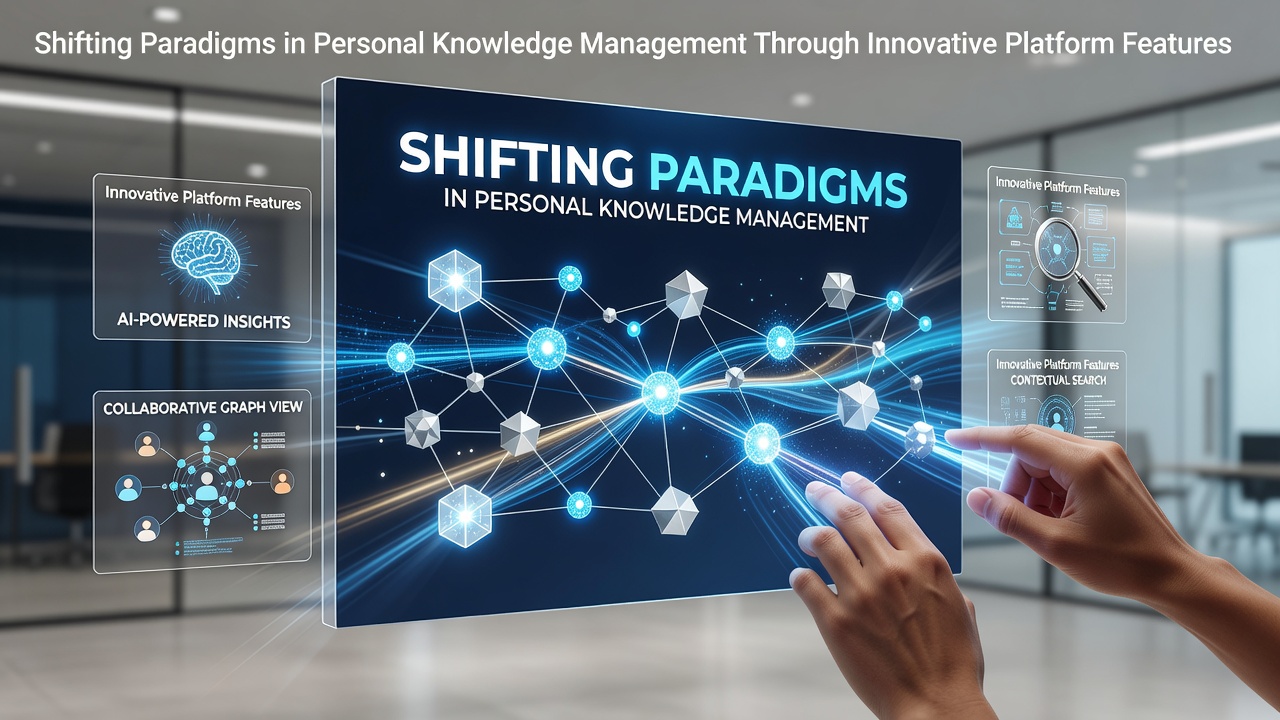
The landscape of personal knowledge management continues to evolve as digital platforms integrate advanced capabilities that reshape how individuals capture, connect, and retrieve information, while data from multiple studies highlight adoption rates climbing steadily since the mid-2010s. Platforms now emphasize graph-based structures over linear folders, which allows users to establish relationships between notes, documents, and multimedia elements without manual categorization in many cases.
Foundations of Modern Personal Knowledge Management Systems
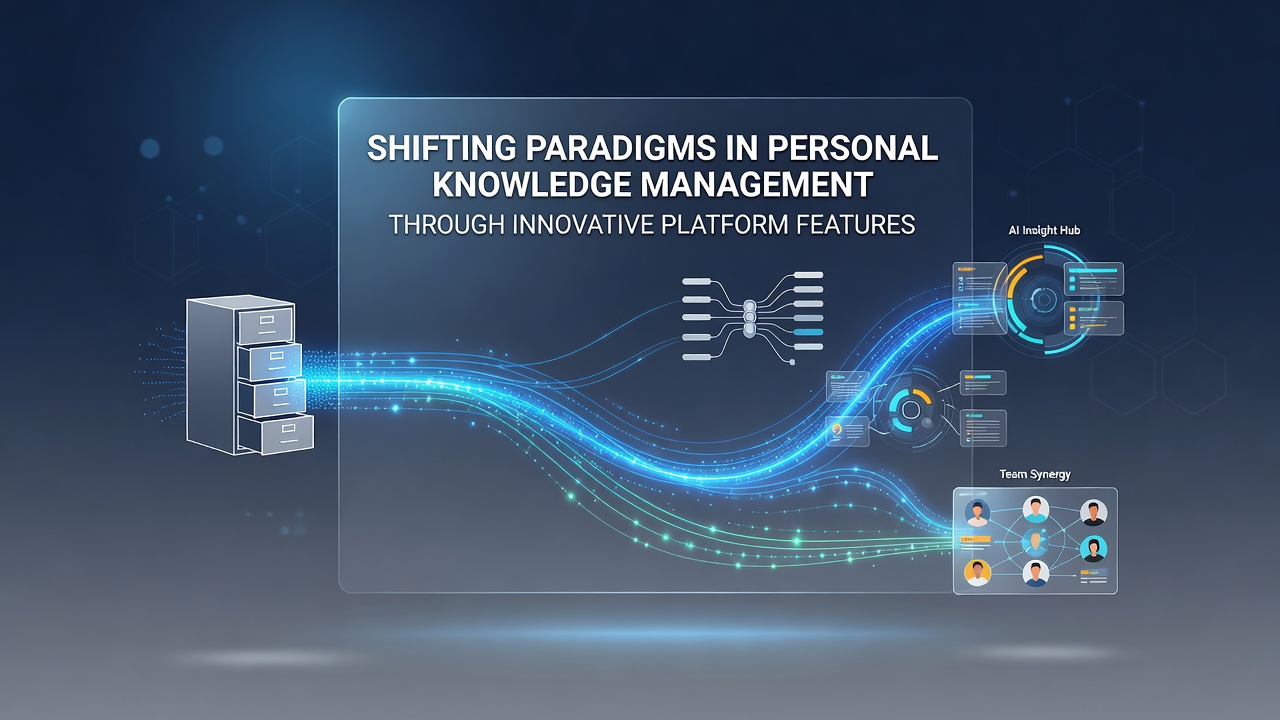
Traditional approaches relied on hierarchical filing systems adn keyword searches that often required users to recall exact terms, whereas contemporary tools employ semantic analysis to surface related content based on context and meaning. Research indicates that organizations adopting these methods report improved information accessibility, and figures from academic surveys show a 40 percent rise in cross-referencing activity among active users between 2020 and 2025. Features such as automatic backlinking and knowledge graphs enable the creation of emergent structures that reflect individual thinking patterns rather than imposed taxonomies.
Integration with external data sources further expands these capabilities, since APIs connect personal repositories to calendars, email archives, and public databases in real time. This connectivity reduces duplication of effort and supports continuous updating without user intervention in routine scenarios. Observers note that platforms offering these linkages experience higher retention among professionals managing complex projects across multiple domains.
Role of Artificial Intelligence in Retrieval and Synthesis
Artificial intelligence modules now handle summarization, entity recognition, and suggestion of connections that previously demanded manual effort, while machine learning models trained on user behavior refine outputs over successive interactions. According to reports from the European Commission on digital skills development, such automation accounts for measurable gains in task completion speed for knowledge workers handling large volumes of research material. Yet the systems maintain user oversight through editable suggestions rather than autonomous actions, which preserves individual control over final outputs.
Voice input and transcription services combine with natural language processing to capture ideas during meetings or fieldwork, converting spoken content into structured entries that link automatically to existing nodes. Data from longitudinal studies conducted across North American universities reveal that consistent use of these transcription tools correlates with denser networks of interconnected notes within six months of adoption. Platforms also surface gaps in coverage by analyzing cluster density, prompting users to expand underdeveloped topics through targeted queries.
Collaborative and Cross-Platform Synchronization Developments
Synchronization across devices operates through encrypted channels that maintain version history, allowing seamless transitions between desktop, tablet, and mobile environments without data loss. Industry reports compiled by the Australian Department of Industry, Science and Resources document that teams utilizing shared knowledge bases achieve faster onboarding for new members when access permissions adjust dynamically based on project roles. These features extend beyond simple file syncing to include real-time co-editing with conflict resolution algorithms that merge simultaneous changes while preserving attribution.
Export options support multiple formats including structured data standards like JSON-LD, which facilitates migration or integration with institutional archives when needed. Researchers at Canadian universities have tracked how such interoperability reduces vendor lock-in concerns, and their findings indicate broader platform switching rates among users who prioritize long-term data portability.
Emerging Trends Projected for September 2026
By September 2026, several platforms plan to roll out enhanced privacy-preserving computation techniques that process sensitive personal data locally before optional cloud synchronization, aligning with updated regulatory frameworks in multiple jurisdictions. This development follows patterns observed in earlier privacy-focused updates and responds to increased scrutiny from data protection authorities in the European Union and similar bodies elsewhere. Additional capabilities around automated audit trails will log every modification with timestamps and source attribution, providing verifiable histories for academic or professional documentation purposes.
Expanded support for multimedia analysis will allow direct extraction of text from images and videos, followed by automatic tagging and linkage to textual notes. Pilot programs described in OECD working papers on digital transformation demonstrate early success in educational settings where students manage research portfolios containing mixed media sources. These updates collectively point toward systems that treat personal knowledge bases as living, interconnected ecosystems rather than static collections.
Conclusion
Platform innovations continue to redefine personal knowledge management by prioritizing relational structures, intelligent assistance, and seamless access across contexts. Evidence gathered from diverse research sources underscores measurable impacts on productivity and information retention when users engage with these evolving toolsets. As new capabilities reach broader deployment in the coming years, the emphasis remains on features that adapt to individual workflows while supporting long-term data stewardship and retrieval efficiency.